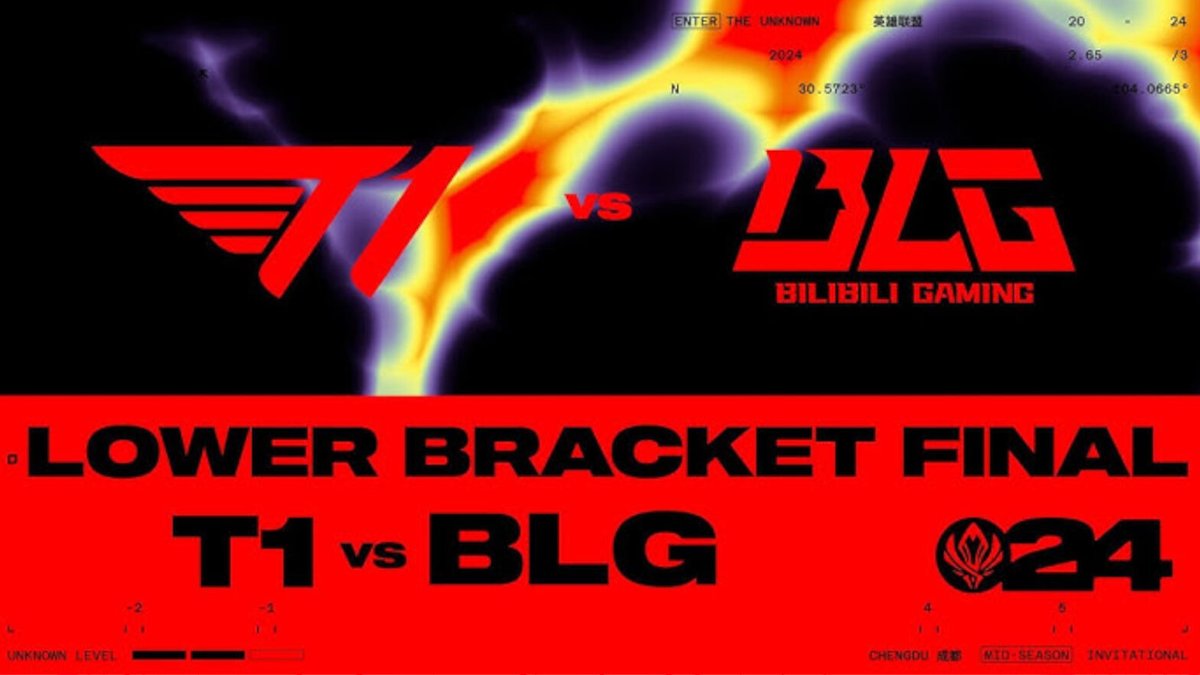
For the bigger picture and full context, make sure you read our main guide on T1 vs Bilibili Gaming: Who Won the Playoffs?.
markdown
The final scoreline showing T1's dominance over Bilibili Gaming is more than just a win; it's a statement. Understanding the 't1 vs blg result' requires dissecting the strategic decisions, individual performances, and overall game dynamics that led to T1's triumph.
At a glance:
- T1 secured a decisive victory against BLG in the playoffs.
- Key factors included superior objective control and team fight coordination.
- Faker's strategic prowess and individual player performances were pivotal.
- BLG struggled to adapt to T1's early game aggression.
- This victory positions T1 as a strong contender in the tournament.
Understanding the Context: More Than Just a Score
Before diving deep, let's quickly recap why this match mattered. The clash between T1 and Bilibili Gaming (BLG) represented a high-stakes encounter in the playoffs, with significant implications for both teams' tournament aspirations. Knowing their historical performances and current form is essential to understand the 't1 vs blg result'.
Game Breakdown: How T1 Dominated
T1's victory wasn't just luck; it was a calculated execution of a well-thought-out strategy. Let's break down the key elements that contributed to their success.
Early Game Dominance
T1 consistently secured early leads across multiple games. This wasn't about random skirmishes; it was about strategic lane control and jungle pressure.
- Jungle pathing: Oner's jungle pathing often countered Shadow's, leading to favorable engagements. Imagine it like a chess match, where Oner predicted Shadow's movements and capitalized.
- Lane priority: Doran and Faker consistently secured lane priority, allowing them to roam and assist in other lanes. This created a snowball effect, amplifying T1's advantage.
Mid-Game Objective Control
Once T1 established an early lead, they transitioned seamlessly into controlling key objectives such as dragons and towers.
- Dragon control: Securing dragons provided crucial buffs, enhancing T1's combat effectiveness. Each dragon acted like a permanent power-up.
- Tower pushes: Coordinated tower pushes extended T1's map control and limited BLG's farm.
Late-Game Team Fight Coordination
In the late game, T1's superior team fight coordination proved decisive.
- Engage initiation: Keria's engage initiation consistently caught BLG off guard, creating favorable fight opportunities.
- Damage focus: Gumayusi's damage focus ensured that key BLG carries were quickly eliminated.
Key Player Performances: The Pillars of T1's Victory
While teamwork is critical, individual performances often make the difference in high-stakes matches.
Faker: The Orchestrator
Faker’s strategic shotcalling and impeccable mid-lane play were instrumental in T1's victory. He wasn't just playing his champion; he was conducting the entire team like an orchestra.
- Roaming and ganking: Faker's timely roams and ganks applied pressure across the map. He was always where he needed to be.
- Objective control assistance: He consistently assisted in securing key objectives, ensuring T1 maintained map control.
Gumayusi: The Damage Dealer
Gumayusi’s consistent damage output in team fights proved crucial for T1. He was the damage powerhouse that BLG struggled to contain.
- Positioning: His impeccable positioning ensured he could deliver maximum damage while avoiding enemy threats.
- Objective taking: He played a key role in taking down towers and securing dragons.
Doran and Oner: The Unsung Heroes
Doran and Oner often go unnoticed, but their contributions are indispensable.
- Doran's lane dominance: Doran's ability to hold his own in the top lane allowed Oner to focus on other areas of the map.
- Oner's jungle control: Oner’s aggressive jungle pathing disrupted BLG’s strategy and secured early advantages for T1.
BLG's Struggles: Where Did They Go Wrong?
To fully grasp the 't1 vs blg result', we need to acknowledge BLG's shortcomings. They faced several challenges that hampered their performance.
Inability to Adapt to Early Aggression
BLG struggled to adapt to T1's early game aggression, often falling behind in gold and experience. They seemed caught off guard by T1's proactive playstyle.
Lack of Objective Control
BLG failed to contest key objectives, allowing T1 to snowball their lead. They simply couldn't match T1's strategic map control.
Team Fight Miscoordination
In team fights, BLG often lacked coordination, leading to disjointed engagements and missed opportunities.
Tactical Analysis: Decision Tree
Here's a simplified decision tree to understand the flow of the game:
- Early Game:
- If T1 gains an early lead -> proceed to objective control.
- If BLG gains an early lead -> T1 focuses on scaling and counter-ganking.
- Mid Game:
- If T1 controls objectives -> push advantages and pressure towers.
- If BLG controls objectives -> T1 defends and looks for pick-offs.
- Late Game:
- If T1 has a gold advantage -> force team fights around objectives.
- If BLG has a gold advantage -> T1 plays defensively and waits for opportunities.
Practical Takeaways: Lessons Learned
What can we learn from the 't1 vs blg result'? Here are a few actionable takeaways:
- Prioritize early game: A strong early game sets the stage for mid-to-late game success.
- Control key objectives: Dragons, towers, and Baron are crucial for securing victory.
- Coordinate team fights: Coordinated engagements are essential for winning team fights.
Expert Opinion
"T1's victory over BLG was a testament to their strategic depth and individual player skill," says renowned League of Legends analyst, MonteCristo. "Their ability to adapt to different game states and execute their strategy flawlessly proved too much for BLG to handle."
Quick Answers: Common Questions
Let's address some common questions and clear up a few misconceptions.
Q: Was this match a fluke?
A: Absolutely not. T1's victory was the result of consistent performance and strategic execution, as further explored in T1 vs BLG Playoffs Result. The game data shows a clear pattern of T1's dominance.
Q: Did BLG underperform?
A: While BLG is a strong team, they struggled to adapt to T1's aggressive playstyle and made critical errors in objective control and team fight coordination.
Q: What can BLG learn from this loss?
A: BLG needs to improve their early game adaptation, objective control, and team fight coordination. They should also focus on analyzing T1's strategy to identify areas for improvement.
Actionable Close: Implementing the Insights
The T1 vs BLG result offers valuable lessons for players and teams alike. Prioritizing early game dominance, controlling key objectives, and coordinating team fights are crucial for achieving success in League of Legends. By analyzing the game data and understanding the strategic dynamics, you can elevate your gameplay and emulate T1's winning formula.