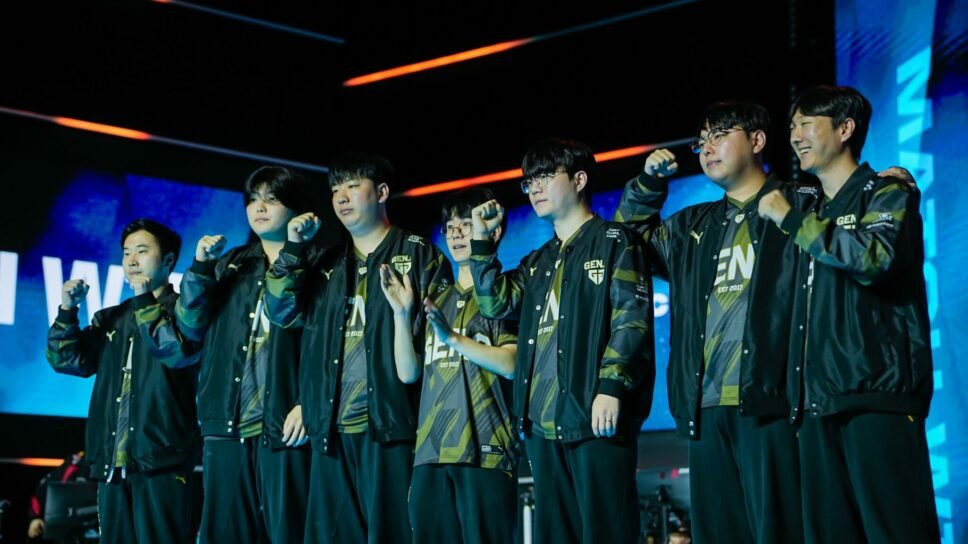
The storied rivalry of skt vs geng continues to electrify the League of Legends scene, and the recent LCK playoffs clash was no exception. While individual games within a series can hinge on many factors, understanding the broader strategic and execution nuances is key to appreciating Gen.G's victory. This article breaks down the pivotal elements that contributed to Gen.G's success, focusing on draft advantages, objective control, and individual player performances.
At a glance:
- Understand how Gen.G's draft strategy countered T1's preferred playstyle.
- Identify key moments where Gen.G secured crucial objectives, turning the tide of the game.
- Analyze the individual performances of key Gen.G players and their impact on the overall victory.
- Learn actionable strategies you can apply to your own League of Legends games.
- Decode common misconceptions about team compositions and objective priority.
Draft Dynamics: Setting the Stage for Success
The draft phase in professional League of Legends is a high-stakes chess match. It's where teams try to outmaneuver each other, securing favorable champion matchups and setting the stage for their preferred playstyle. In this skt vs geng match, Gen.G showcased a clear understanding of T1's tendencies and drafted accordingly. A key element was Gen.G’s ability to prioritize champions that could both pressure T1’s carries and effectively peel for their own.
For instance, if T1 consistently picks a poke-heavy composition, Gen.G might prioritize champions with engage potential to force favorable fights and deny T1’s ability to safely damage from range. You can see more about the specific results of the game GenG wins first playoff game.
Objective Control: Seizing Map Dominance
Securing objectives like Dragons, Rift Heralds, and Barons Nashor is critical for building a gold and experience lead. Gen.G’s success in this match stemmed from their proactive approach to objective control. They didn't just react to opportunities; they created them.
- Early Game Vision Control: Gen.G invested heavily in early-game vision, denying T1 crucial information and allowing Canyon to path efficiently towards objectives.
- Synchronized Rotations: Gen.G’s rotations were well-coordinated, allowing them to quickly respond to objective spawns and outnumber T1 in crucial skirmishes.
- Baron Nashor Control: Gen.G’s ability to secure Baron Nashor proved decisive. They used the Baron buff to siege T1’s base and close out the game.
Example: Imagine a scenario where a Dragon spawns, and both teams are posturing for control. Gen.G, having established superior vision, anticipates T1's approach and sets up a flanking maneuver. This forces T1 to either concede the Dragon or engage in a disadvantageous fight, giving Gen.G a significant advantage.
Individual Player Performances: Key Playmakers
While teamwork is paramount, individual performances can often be the difference between victory and defeat, especially in high-pressure skt vs geng matchups. In this game, several Gen.G players stood out:
- Ruler (ADC): Ruler's consistent damage output and impeccable positioning were crucial in team fights. He consistently delivered high DPS while avoiding unnecessary risks.
- Canyon (Jungle): Canyon's aggressive early-game ganks and objective control set the pace for Gen.G. His ability to identify and exploit T1's weaknesses was key to their success.
- Chovy (Mid): Chovy’s lane dominance and ability to roam effectively created pressure across the map. His champion pool allowed Gen.G flexibility in their draft.
Case Snippet: Consider a moment where Ruler is being targeted by T1's engage. Instead of panicking, he calmly uses his positioning and kiting skills to evade the threat, allowing his team to turn the fight and secure a crucial kill. This showcases his composure and ability to perform under pressure.
Practical Playbook: Implement These Strategies
Here are some actionable strategies inspired by Gen.G's play that you can apply to your own League of Legends games:
- Prioritize Vision Control: Invest in early-game wards and control wards to deny enemy vision and gain information about their movements.
- Practice Objective Rotations: Coordinate with your team to efficiently rotate towards objectives, ensuring you have numbers advantage.
- Analyze Opponent Tendencies: Pay attention to your opponent's champion picks and playstyles, and draft accordingly. For example, if the enemy jungler prefers early ganks, be sure to ward your jungle entrances.
- Communicate Effectively: Clear and concise communication is essential for coordinating rotations, objective control, and team fights.
Quick Answers: Addressing Common Questions
- Q: Is draft really that important?
- A: Absolutely. A well-executed draft can provide a significant advantage, setting the stage for success in the early and mid-game. It's not just about picking strong champions; it's about creating a cohesive composition that counters the opponent's strategy.
- Q: How can I improve my objective control?
- A: Focus on vision control and early-game pressure. Deny enemy vision around objectives and use your jungle to apply pressure in lanes, forcing the enemy team to react.
- Q: What if my team doesn't communicate?
- A: Take the initiative! Even simple pings can make a big difference. Try to lead by example and encourage your teammates to communicate more effectively.
Actionable Close: Level Up Your Game
Gen.G's victory in this skt vs geng match wasn't just a result of luck; it was the culmination of strategic drafting, proactive objective control, and stellar individual performances. By implementing the strategies outlined in this article, you can elevate your own game and start achieving more consistent results. Analyze your own replays, identify areas for improvement, and focus on refining your decision-making process. Understanding the nuances of these high-level matches can translate into tangible improvements in your own gameplay.