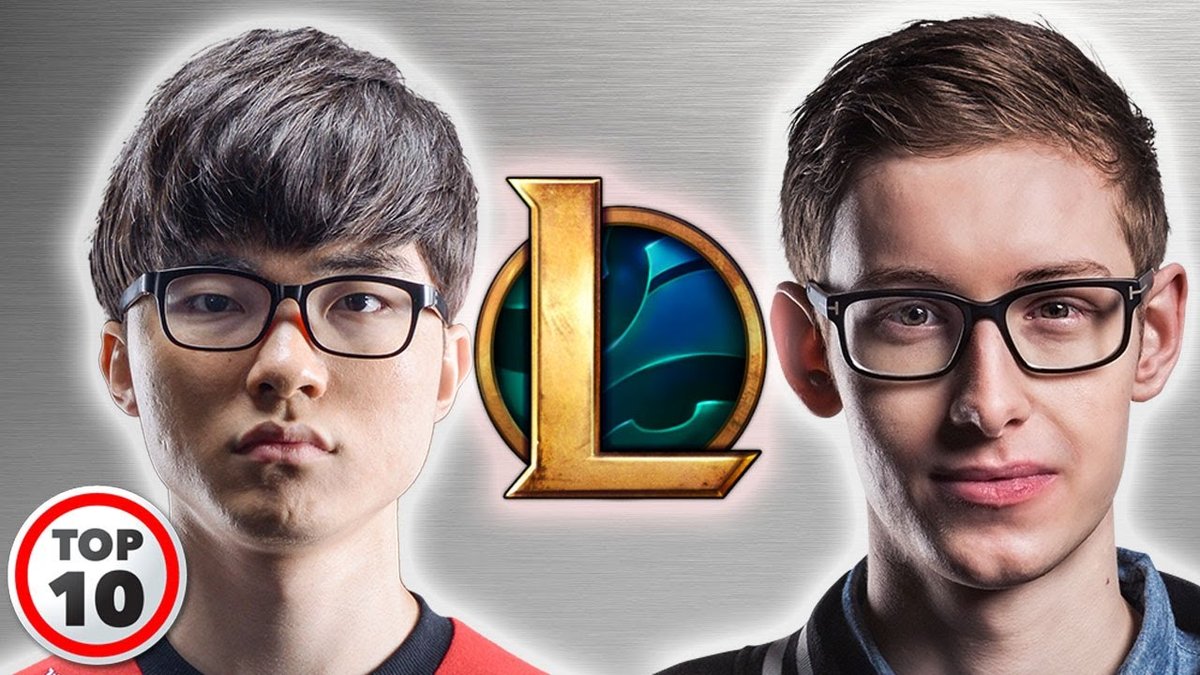
The world of League of Legends is filled with incredible feats of skill, but only a select few players transcend mere proficiency to become genuine legends. Identifying the most famous League of Legends players involves more than just win rates; it's about impact, innovation, and consistently performing on the biggest stages. How do we truly measure legendary status in a constantly evolving esport?
At a glance:
- Understand the key attributes that define a truly legendary LoL player.
- Explore specific examples showcasing exceptional careers and defining moments.
- Compare different eras of LoL esports and their iconic figures.
- Discover practical strategies for emulating the habits of successful players.
- Address common misconceptions about what makes a player "the best."
Beyond the KDA: Defining a Legend
It's easy to look at kill-death-assist ratios and rank players accordingly. But the most famous League of Legends players possess qualities that statistics alone can't capture. What makes a player legendary?
- Mechanical Skill: The raw ability to execute complex maneuvers with precision. Think Faker's Zed outplay against Ryu, a moment etched in LoL history.
- Game Sense: An intuitive understanding of macro strategy, objective control, and opponent tendencies. Ambition's ability to transition from mid-lane to jungle and lead Samsung Galaxy to a World Championship exemplifies this.
- Adaptability: The capacity to adjust playstyle, champion pool, and strategies in response to meta shifts and opponent counter-picks. Perkz's success in multiple roles (mid, ADC) underscores this versatility.
- Consistency: Maintaining a high level of performance over extended periods, avoiding slumps and consistently delivering in crucial matches. Ruler's reputation is built on solid, reliable play in high-pressure scenarios.
- Impact: The ability to elevate teammates, inspire future generations of players, and leave a lasting mark on the game itself.
- Championship Pedigree: Winning titles, especially World Championships, is a major hallmark of legendary status.
Era-Defining Performances: Hallmarks of Fame
Certain performances permanently cement a player's reputation. These moments aren't just wins; they're displays of dominance, innovation, and sheer will.
- Faker's Zed vs. Ryu (2013): A single outplay that launched a legend. Faker's mechanical prowess and audacity were on full display, solidifying his place as a rising star. It immediately became a benchmark for mid-lane skill.
- Ambition's Jungle Leadership (2017): While statistically not the flashiest jungler, Ambition's strategic mind and leadership were instrumental in Samsung Galaxy's World Championship victory. He dictated the pace of games and enabled his teammates to shine.
- Mata's Vision Control (2014): Mata revolutionized the support role with his unparalleled vision control and map awareness. His shotcalling and ward placement were years ahead of their time, earning him the World Championship MVP award.
- Canyon's Jungle Dominance (2020): Canyon's aggressive and proactive jungling style was a key factor in Damwon Gaming's (now Dplus KIA) World Championship run. He consistently out-pressured opponents and secured objectives.
Legends Across Regions: A Global Pantheon
Legendary status isn't confined to a single region. Each major region boasts its own iconic figures who have shaped the landscape of professional League of Legends.
- LCK (Korea): Dominated by players like Faker, Bengi, Mata, Showmaker, and Canyon. The LCK is renowned for its strategic depth and disciplined play.
- LPL (China): Uzi and Xiaohu are standout examples. The LPL is known for its aggressive, kill-heavy style. Knight is also a rising star with incredible laning prowess.
- LEC (Europe): Perkz and Caps are prominent figures, known for their versatility and willingness to experiment. Rekkles and Jankos are also well-respected veterans.
- LCS (North America): Doublelift is arguably the most iconic NA player, known for his longevity and consistent performance. Bjergsen also has a strong claim.
Each region fosters a unique playstyle that's influenced it's famous League of Legends players.
The Pitfalls of "Best": Subjectivity Reigns
Declaring someone the "best" is inherently subjective. Consider these factors that make direct comparisons difficult:
- Meta Shifts: The game constantly evolves. A dominant player in one meta may struggle in another.
- Team Synergy: A player's performance is heavily influenced by their teammates and team environment.
- Role Specialization: Comparing a top laner to a support is like comparing apples and oranges. Their roles and responsibilities are fundamentally different.
- Regional Differences: Playstyles vary across regions, making it difficult to directly compare players from different leagues.
Instead of searching for an objective "best," focus on appreciating the unique strengths and contributions of each legendary player. To understand the broader context of these achievements, See the greatest LoL players and how these figures fit into the overall history of the game.
Emulating the Greats: A Practical Playbook
While you may not become the next Faker, you can learn valuable lessons from legendary players to improve your own game:
- Study VODs: Watch replays of professional games, paying attention to decision-making, positioning, and warding habits. Focus on why they do what they do, not just what they do.
- Master Fundamentals: Perfect your last hitting, map awareness, and champion mechanics. These are the building blocks of high-level play.
- Expand Your Champion Pool: Don't become a one-trick pony. Learning multiple champions will make you more adaptable and less predictable.
- Seek Feedback: Ask friends, coaches, or higher-ranked players to review your replays and provide constructive criticism.
- Analyze Your Own Games: Identify your mistakes and develop strategies to avoid repeating them.
- Practice Consistently: Regular practice is essential for maintaining and improving your skills.
Quick Start Checklist:
- Set a Goal: Focus on improving one specific aspect of your game each week (e.g., CS per minute, warding frequency, map awareness).
- Watch One Pro Game: Analyze a game featuring a player who excels in your chosen role.
- Practice in Normals: Experiment with new strategies and champions in a low-pressure environment.
- Review One Replay: Identify one mistake you made and develop a plan to avoid it in the future.
Quick Answers: Common Questions about LoL Legends
- Q: Is Faker really the best of all time?
- A: He's widely considered the greatest due to his longevity, numerous championships, and impact on the game. However, "best" is subjective and depends on the criteria used.
- Q: Why are so many legends Korean?
- A: South Korea has a strong esports infrastructure, dedicated fan base, and a culture that values hard work and discipline. This has fostered a highly competitive environment that produces top-tier talent.
- Q: Can anyone become a legendary player?
- A: While not everyone can reach the absolute pinnacle, anyone can improve their skills and strive for excellence. Dedication, hard work, and a willingness to learn are essential.
- Q: Are stats the most important factor in determining a player's legacy?
- A: Stats provide valuable insights, but they don't tell the whole story. Impact, leadership, and innovation are also crucial factors.
- Q: What separates a good player from a legendary one?
- A: Consistency under pressure and the ability to adapt to any meta while still being innovative separates a good player from a legendary one.
Beyond the Game: Leaving a Lasting Impression
Ultimately, what makes a player truly legendary extends beyond their in-game performance. It's about their impact on the community, their sportsmanship, and their lasting legacy. These famous League of Legends players inspire millions to play, compete, and strive for greatness. The journey to legendary status is a testament to skill, dedication, and the relentless pursuit of excellence.